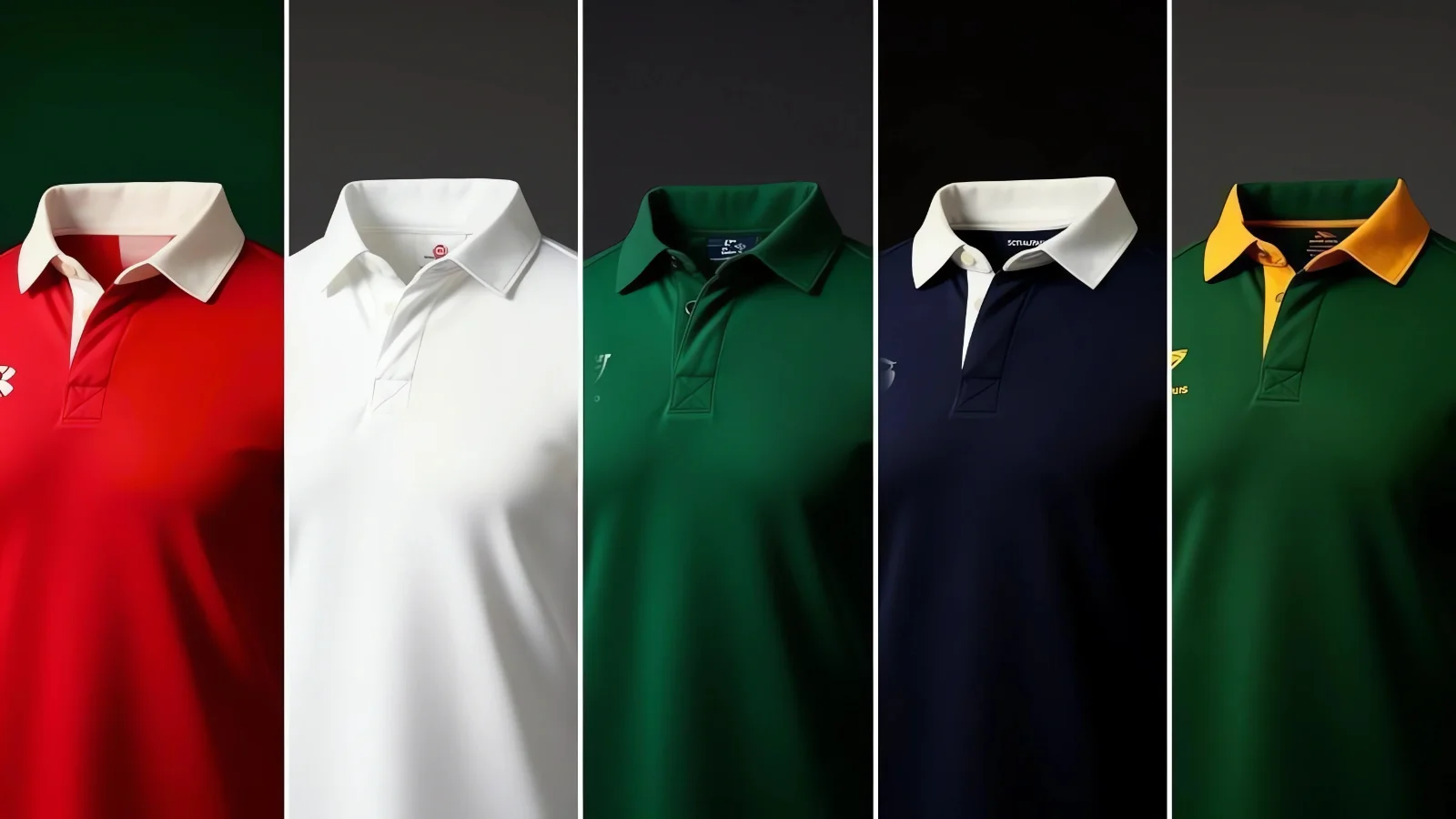
Designing a custom rugby jersey is more than picking a colour and slapping on a badge. A great kit balances club identity, player comfort, and the punishment of match day. This guide walks UK clubs, schools, and social teams through every decision — colours, crest placement, fabric, sizing, and personalisation — so your team steps onto the pitch looking sharp and playing freely.
1. Start with your club identity
Before you open a colour picker, gather what your club already stands for: heritage colours, sponsor requirements, county association rules, and whether you need matching home and away strips. If you play in a league, check any restrictions on clashing colours with common opposition kits.
Primary colour — the dominant body of the jersey.
Secondary colour — sleeves, collar, or panels.
Accent colour — piping, numbers, and crest outlines.
Two colours plus one accent almost always looks more professional than a busy four-colour design. Save loud gradients for training tops.
2. Choosing colours that work on the pitch
British weather is unforgiving. Muddy pitches, low winter light, and rain-soaked shirts all change how a colour reads from the touchline. A few practical rules:
High contrast numbers. Referees and spectators need to read backs from 30+ metres. White or yellow on dark, black on light.
Avoid pure red vs pure green for opposing hoops — it''s the most common colour-blindness clash.
Test in daylight and floodlight. Navy and black look identical under some LEDs; burgundy and brown blur in low sun.
3. Crest and sponsor placement
Placement is where most amateur designs fall down. Rugby jerseys have a standard layout the eye expects:
Club crest — left chest, roughly 90–110mm wide, sitting just above the heart.
Main sponsor — centre chest, 200–260mm wide, below the collar bone line.
Secondary sponsor — upper back or lower back, above or below the number.
Player number — centre back, 250–300mm tall, high-contrast against the body colour.
Player name or initials — arched above the number, 40–60mm tall.
Sleeve badges — county, league, or memorial patches on the upper sleeve.
At QuickeeTee we embroider crests rather than print them wherever the fabric allows — embroidery survives scrums, wash cycles, and a decade in the club kit bag far better than heat-transfer vinyl.
4. Fabric choices: what to look for
Rugby jerseys take more abuse than any other team shirt. The fabric you choose determines whether the kit lasts one season or five.
Heavyweight polyester (260–300gsm) — the traditional match jersey. Tight weave resists grabs and stretches back into shape.
Performance polyester (180–220gsm) — lighter, faster-drying, great for backs and 7s squads. Slightly more prone to snagging.
Poly-cotton blends — softer against the skin but heavier when wet; better suited to training tops than match shirts.
Reinforced collars and cuffs — a proper rugby collar has a woven, stitched-down construction so it doesn''t get ripped open in a tackle.
Ask your supplier about seam construction too. Four-needle flatlock seams sit flat against the skin, resist bursting, and stop chafing under scrum caps and shoulder pads.
5. Sizing your squad properly
Rugby fits are cut differently to football or general sportswear — shorter in the body, wider across the chest and shoulders, with room for base layers. Order a sizing set before you commit to a full squad run. QuickeeTee stocks adult sizes Small through 7XL and youth sizes from 5-6 years up to 13 years, so front row forwards and mini-junior wingers can wear the same design.
6. Personalisation: names, numbers, and initials
Custom embroidery lifts a jersey from decent to iconic. Popular options:
Player initials on the chest — subtle, professional, and cheaper than full names.
Squad numbers printed or embroidered on the back — embroidered numbers cost more but hold up over years of washing.
Memorial or tour tags — small woven labels stitched inside the collar for anniversaries or memorial matches.
QuickeeTee''s embroidery pricing is flat and transparent: up to 5 letters is a fixed £4, longer text runs are priced per line, and a back-of-shirt printed number is £6 per jersey.
7. UK manufacturing: why it matters
Producing your kit in the UK means shorter lead times (typically 2–3 weeks vs 8–10 weeks from overseas), the ability to reorder single replacement shirts mid-season, and no import duty surprises. It also means you can visit or call the people making your kit — useful when you need to change a sponsor logo two days before a cup final.
8. Design checklist before you order
Confirmed club colours and any league or sponsor mandates.
Vector artwork (.ai, .eps, or high-res .pdf) for crest and sponsors.
Number and name list for the full squad, checked twice for spelling.
Sizing set trialled by at least one forward and one back.
Sample or digital mock-up signed off by the committee.
Delivery date confirmed against your first fixture.
Ready to design your kit?
QuickeeTee is a UK-based custom embroidery specialist producing rugby jerseys, training tops, and matching leisurewear for clubs, schools, and touring teams across Britain. Use our customiser to preview colours and placements, or request a jersey quote and we''ll come back to you within one working day.